This store requires javascript to be enabled for some features to work correctly.


Opening Friday, May 8, 2026
18:00-20:00
Guy Maddin and David Hoffos both construct fragmented, image-based narratives that treat memory as unstable, collaged, and deeply subjective, drawing from cinematic language and visual illusion to blur the line between reality and recollection. Through analog processes and deliberate imperfections, their practices reveal how perception, nostalgia, and personal history are continuously reconstructed rather than fixed.


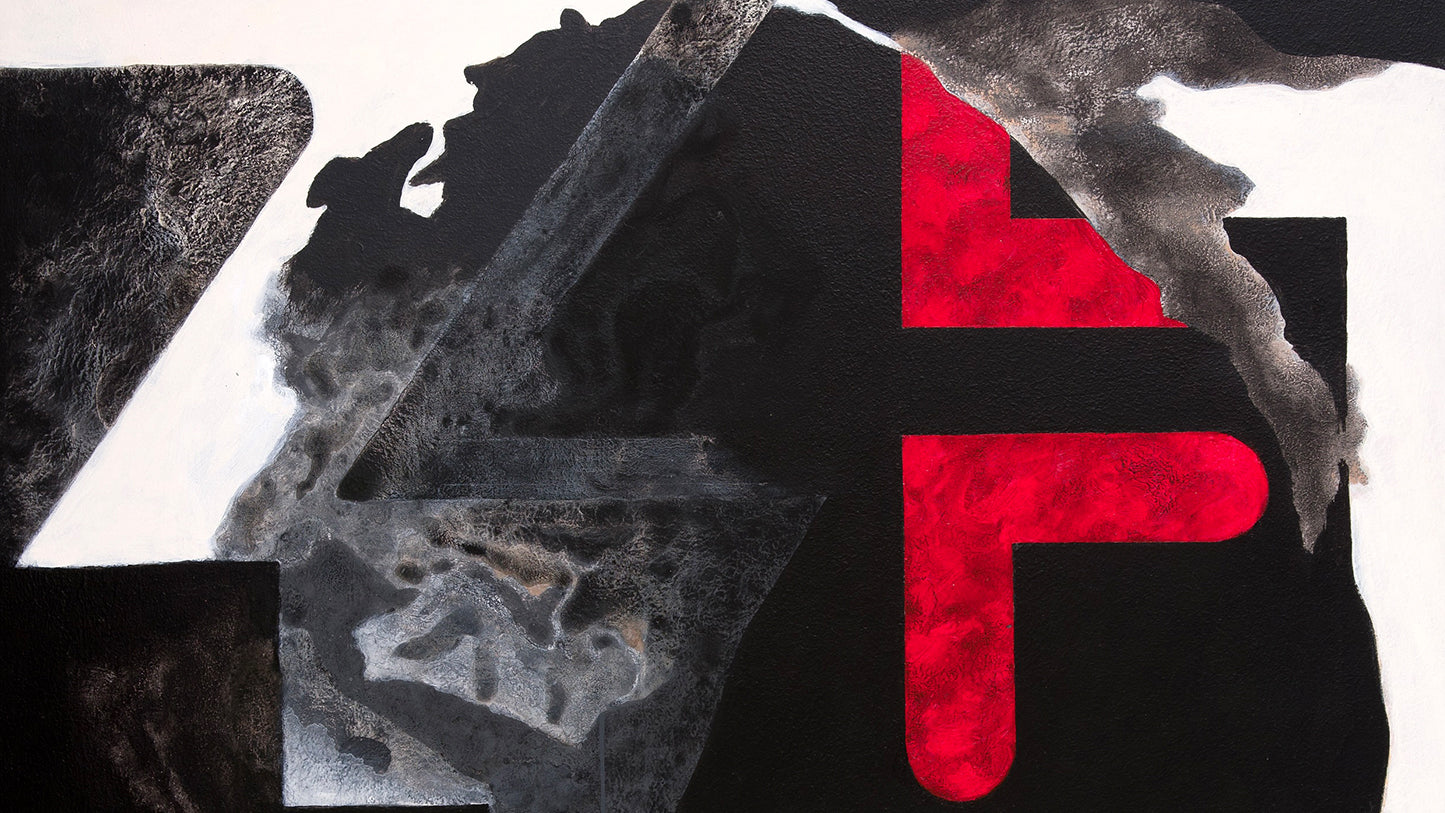
Guy Maddin
A memory is born 8
Collage on paper
8 x 10 Inches
2026


After forty years of filmmaking, Guy Maddin has come to think of his life only in visual terms, in jumbled sketches remembered poorly. His autobiography could never be a series of sentences packed into a memoir on a bookshelf. Rather, he recalls life in sequences of something like movie storyboards, those elemental blueprints of filmic preparation, the syntax of cinematic expression itself. Maddin revisits and rereads his past, shuffling through these clustered, disorganized narratives, sometimes intensely emotional, sometimes utterly inconsequential—always fragmented. Sometimes the memories of his parents have surely been collaged onto his own. Maybe a memory is born only when two or more sensations collide? And all non-impacts are swiftly forgotten?


Guy Maddin has directed thirteen feature-length movies, most recently Rumours (2024), starring Cate Blanchett and Roy Dupuis; as well as The Forbidden Room (2015), My Winnipeg (2007), and The Saddest Music in the World (2003). He has also mounted over 70 performances of his films around the world, featuring live elements—orchestra, sound effects, singing, and narration—most recently The Green Fog (2016), which was accompanied live by the Kronos Quartet. His screenplay collaborators include Nobel Laureate Kazuo Ishiguro and poet John Ashbery. His movies Archangel (1990)& The Heart of the World (2000)bothwon America’s National Society of Film Critics awards for Best Experimental Film. For the past 15 years, he has partnered with co-directors Evan and Galen Johnson. Maddin started making collage to inspire screenplay ideas, plan shoots, teach himself about colour, and calm his nerves. He is now hooked on the practice.


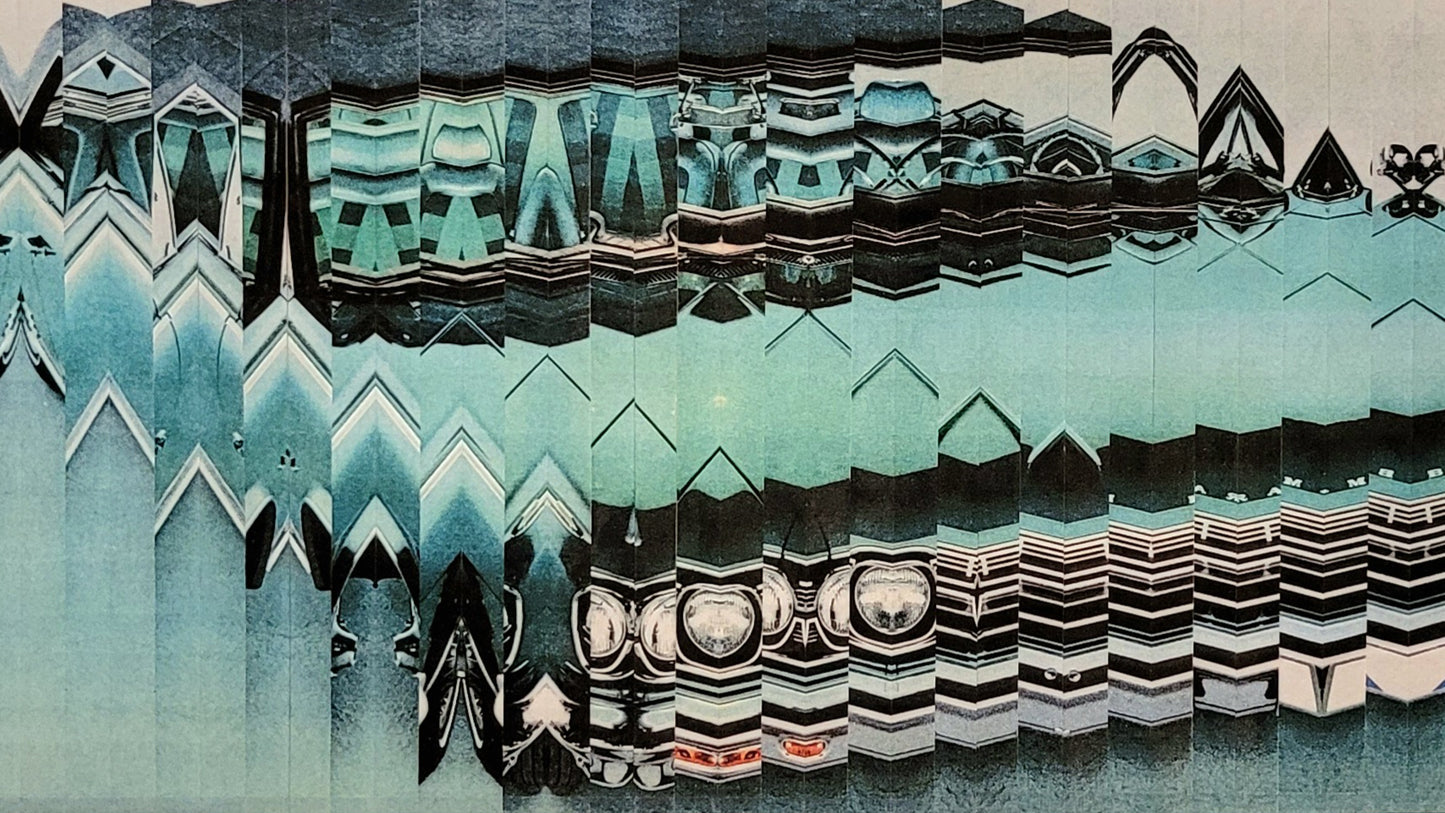
David Hoffos
Niagara Falls
Digital print on dibond from handmade construction
26 x 38 Inches, White washed maple frame
Edition of 3
Original construction available, please enquire


For more than three decades, David Hoffos has been known for immersive, multi-channel installations- dark walk-through environments and dreamlike nocturnal dioramas eerily brought to life through his signature low-tech illusionism.
ROADTRIPPING shifts the scene from nighttime narratives to daytime reveries, bringing a previously hidden current of Hoffos’s practice into full view for the first time.
They explain, “If my central creative impulses continue to draw from the worlds of cinema, scenography, psychology and illusion, there has always been a quieter but persistent call towards a lighter, mostly private, often unpresentable mode of expression where I indulge a more open-ended set of visual experiments.”
This new series of constructed objects (collages for lack of a better word) are manual and analog. They openly display their imperfections while emphasizing the truth of a photograph as a flat, tactile surface. Hoffos describes the production process as unpredictable, noting that “They vary wildly in their complexity, often dashed off in a moment or laboured over for days”.
The unifying thread within this long-running body of work has always been the appropriation and alteration of images from a collection of 60s and 70s ephemera. In the case of this series, Kodachrome postcard scenes of travel and leisure reference an imaginary of family road trips, revisiting some of the hazy settings and moments of the artist’s adolescent inspirations.
Hoffos explains that “These sources are fed into a blender of revolving techniques and their endless variations. Mosaic, lenticular, kaleidoscopic, 3-d, anamorphic, magnifying, blurring, distorting and obscuring formulas and effects are recombined in search of undiscovered, lost, unlikely - and often absurd - ways of making (and unmaking) a picture.” What emerges is a kind of lucid daydream, where perception collides with nostalgia through the psychoactive lens of collective memory.